Global survey reveals limited public awareness of invasive alien species and little support for their management
A new study revealed that people who are aware of the issue of biological invasions tend to perceive them more negatively and are more supportive of their management

A new global study involving the University of Stirling’s Dr Zarah Pattison has shown that fewer than half of people can name an invasive alien species occurring in their country, and that public support for measures to manage invasive species is generally low.
Led by Ana Novoa and Petr Pyšek from the Institute of Botany of the Czech Academy of Sciences and the Estación Experimental de Zonas Áridas (Spain), the study analysed responses from more than 20,000 people in 54 countries across the world.
It revealed that people who are aware of the issue of biological invasions tend to perceive them more negatively and are more supportive of their management.
Dr Zarah Pattison, Senior Lecturer in Plant Sciences at the University of Stirling, said: “Invasive species are often the unintended consequence of human activities that move plants and animals beyond their natural ranges. Once established, they can have devastating impacts on biodiversity, ecosystems, and economies.
Devastating impact
“Improving awareness is fundamental to building public understanding and support for management actions needed to reduce the impacts of invasive species, while also empowering people to play a role in preventing future invasions.”
Invasive alien species are among the major drivers of biodiversity loss and can cause substantial ecological, economic and societal impacts. Their successful management depends not only on scientific knowledge and effective management methods, but also on public acceptance. Opposition from the public can make management difficult, particularly where control involves animals or methods perceived as controversial.
Until now, studies of public awareness and attitudes have mostly been restricted to individual regions, particular species or specific stakeholder groups.
To obtain a global picture, the international team - based in 18 different countries - carried out a standardised survey across 54 countries on all six inhabited continents.
The questionnaire was translated into 23 languages and, after data screening, included responses from 20,420 people.
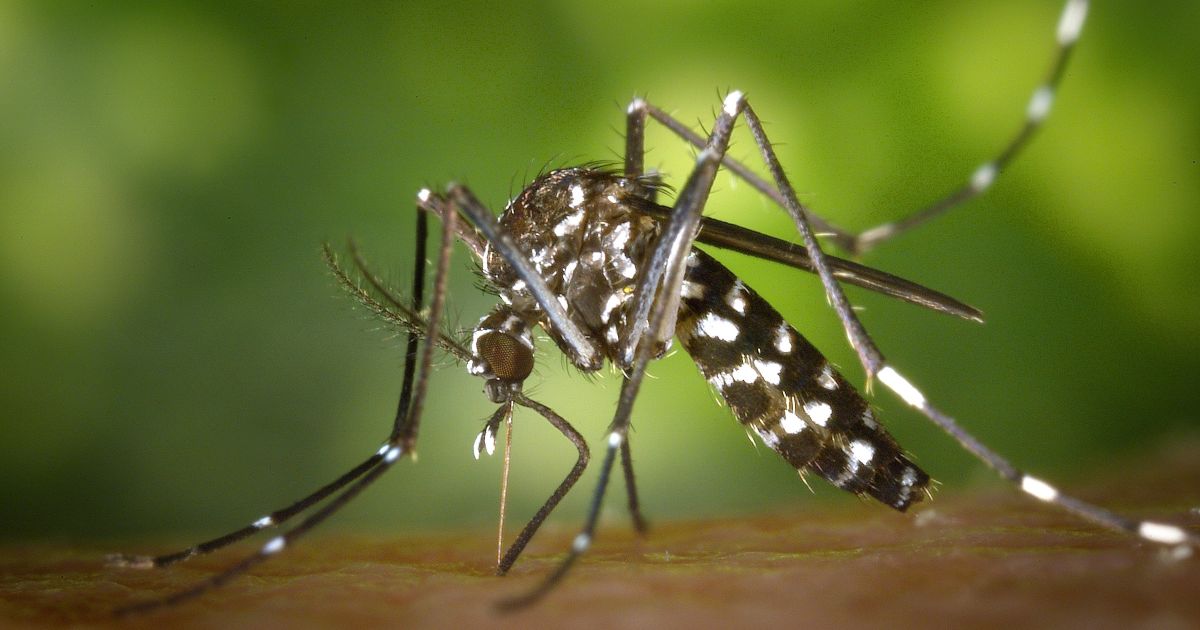 Invasive mosquitos were the most regularly identified alien species.
Participants were asked whether they could name invasive alien species present in their country, how they perceived invasive species, and whether they would support different management measures.
Respondents collectively mentioned 225 different invasive alien taxa. The taxa named most often worldwide were invasive mosquitoes (Aedes spp.), rats (Rattus spp.) and water hyacinth (Pontederia crassipes). Vertebrates were the group most frequently mentioned overall.
“What surprised us most was how limited public awareness of biological invasions is, despite invasive alien species being a major global environmental problem.
“Only about 42% of respondents were able to name at least one invasive alien species occurring in their country,” said Ana Novoa, from the Estación Experimental de Zonas Áridas (EEZA-CSIC, Spain) and the Institute of Botany of the Czech Academy of Sciences and lead author of the study.
“At the same time, awareness mattered: people who could name at least one invasive alien species were more likely to perceive invasive alien species negatively and to support their management.”
Education and age matter more than national context
Awareness was most strongly associated with age and education: older respondents and those with higher levels of education were more likely to name invasive alien species. People living in large cities also tended to have greater awareness than those from smaller towns or rural areas.
“We often think that people living in countries with many invasive alien species, or in places where their impacts are particularly visible, will automatically be more aware of the problem.
“Our results show that this is not necessarily the case. Who people are, particularly their age and education, appears to matter more than many of the broader characteristics of the country where they live,” explained Sven Bacher from the Fribourg University in Switzerland, a core collaborator on the study.
Knowing about invasions is associated with greater support for action
The study also revealed a consistent relationship between awareness, perceptions and attitudes towards management.
Respondents who could name at least one invasive alien species were more likely to perceive invasive species negatively. Awareness and more negative perceptions towards invasive alien species were, in turn, associated with greater support for management measures.
Despite this relationship, overall support for management was low. Most of the management measures considered in the survey were supported by fewer than half of respondents. Measures targeting invasive alien vertebrates received significantly less support than those directed at invasive alien plants or insects.
“Over the last few decades, invasion science has made enormous progress in documenting where alien species occur, how they spread and what impacts they cause. But effective management ultimately takes place in society, not in a scientific vacuum,” said Petr Pyšek, senior author of the study and head of the Department of Invasion Ecology at the Institute of Botany of the Czech Academy of Sciences.
“If people do not understand why particular invasive species are a problem and why management is necessary, even scientifically well-founded measures may be difficult to implement.”
Management of invasive vertebrates was particularly unpopular. The authors suggest that this may partly reflect the greater emotional appeal attached to some vertebrates, especially mammals. By contrast, management of invasive plants and insects was generally more acceptable.
Better communication is essential
According to the authors, the findings highlight an important but sometimes underestimated dimension of biological invasions. Developing better detection and management methods alone will not be sufficient if society does not understand why action is needed.
Ross Shackleton, from the Swiss Federal Research Institute (WSL) and core collaborator of the study, said: “The answer is not simply to tell people that alien species are ‘bad’. Communication needs to explain which species cause problems, what those problems are, why particular management actions are proposed, and what the alternatives may be.
“Public engagement needs to be part of invasion management from the beginning, rather than something added once conflicts have already arisen. It is also important to acknowledge that people do have different views of invasive species, and multiple perspectives need to be accounted for in management.”
The authors point to schools, the media and environmental education as important avenues for improving long-term awareness. Communication and training may be particularly important in sectors closely linked to species introductions, such as agriculture, forestry, aquaculture and tourism.
At the same time, approaches need to recognize local knowledge and cultural perspectives rather than reducing attitudes towards alien species to a simple distinction between “good” and “bad”.
“The biological invasion crisis is expected to intensify, but our results show that there is still a large gap between how the problem is recognized by scientists and by the public,” concludes Novoa. “Closing that gap will be important if societies are to support effective and socially acceptable responses to invasive species.”
Limited global awareness of invasive alien species and little support for their management is published in iScience.
UN Sustainable development goals
The University of Stirling is ranked among the top 200 institutions in the world for its contribution to meeting the United Nations Sustainable Development Goals (SDGs). The research or activity detailed above relates to the following SDGs.