New investment backs efforts to combat antimicrobial resistance across agrifood sectors
The AMAST Network will begin a five-year programme focused on developing and testing practical approaches to antimicrobial stewardship across UK food production
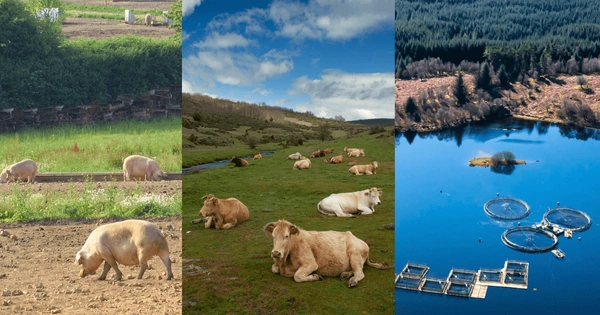
A UK-wide network bringing together farmers, veterinarians, industry, researchers and policymakers has secured new investment to turn the priorities identified by the agrifood sector into practical action on antimicrobial resistance.
The AMAST (Antimicrobial Resistance in Agrifood Systems Transdisciplinary) Network, involving Dr Andrew Desbois from the University of Stirling’s world-renowned Institute of Aquaculture, will begin a new five-year programme focused on developing and testing practical approaches to antimicrobial stewardship across UK food production.
Dr Andrew Desbois will provide leadership on aquaculture and alignment of activities with the UK National Action Plan on AMR.
He explained: “The UK aquaculture sector, including salmon and trout producers, have performed particularly strongly in reducing antibiotic usage.
“This new funding allows us to consider the international context more thoroughly because AMR is a global challenge that requires coordinated action. It means we can go even further across the agrifood sectors, continuing conversations as a trusted partner with producers, veterinarians, regulators, policymakers and others.”
AMAST is one of 18 research and innovation projects that will receive a share of £54million from a joint UK government and UKRI investment to tackle a range of biosecurity threats, such as antimicrobial resistance (AMR).
Since AMAST was established in 2024, more than 250 members from farming, veterinary practice, industry, government and academia have collectively helped identify where further progress towards effective antimicrobial stewardship is needed and what gets in the way.

Senior lecturer, University of Stirling Institute of Aquaculture
The UK aquaculture sector, including salmon and trout producers, have performed particularly strongly in reducing antibiotic usage. This new funding allows us to consider the international context more thoroughly because AMR is a global challenge that requires coordinated action.
AMAST is one of 18 research and innovation projects that will receive a share of £54million from a joint UK government and UKRI investment to tackle a range of biosecurity threats, such as antimicrobial resistance (AMR).
Since AMAST was established in 2024, more than 250 members from farming, veterinary practice, industry, government and academia have collectively helped identify where further progress towards effective antimicrobial stewardship is needed and what gets in the way.
The network has worked directly with different sectors rather than starting with predetermined research questions, building shared priorities around animal health, antimicrobial use, diagnostics, data, behaviour and the environment. The network’s growth and its emphasis on trusted cross-sector relationships are reflected in the funded proposal.
Focus areas
UK agriculture has already made major progress in reducing antimicrobial use while protecting animal health and productivity. The new programme will focus on some of the harder remaining challenges and on turning evidence and sector experience into approaches that can work in everyday practice.
AMAST Phase 2, Cultivating mindsets and practices for antimicrobial stewardship in agrifood systems, will concentrate around three connected areas:
- Pigs: working with farmers, veterinarians and advisers on farms facing sustained disease and antimicrobial-use challenges, using swine dysentery as a model to connect better diagnostics, biosecurity, farm management and decision-making.
- Ruminants: putting the UK Ruminant Antibiotic Stewardship Roadmap into practice. Led by the Royal Veterinary College with RCVS Knowledge, Royal Holloway University of London and the Royal Agricultural University, this work will co-design trusted ways to collect and use antimicrobial-use data so farmers and veterinarians can understand their own use, benchmark progress and make informed stewardship decisions.
- Across agrifood: identifying approaches that work across livestock, aquaculture, gamebirds and crops, and bringing international experience into UK stewardship.
Across all three areas, the team will also address environmental aspects of AMR, including antimicrobial residues in manure, soil and water. It will train the new generation of early-career researchers and set up an international expert panel to share UK learning globally.
AMAST is led by Dr Matthew Gilmour at the Quadram Institute, with co-directors Dr K. Marie McIntyre and Professor Alex Hughes at Newcastle University. The programme brings together researchers from 13 organisations alongside veterinary, farming, industry and government partners.
Looking to the future
Dr Gilmour commented “UK agriculture has already made major progress on antibiotic stewardship. The next gains will not come from simply telling farmers and vets to use less; they will come from solving the real problems that still drive antimicrobial use: disease pressure, availability of alternative medicines, diagnostic uncertainty, data gaps, economics and trust.
“AMAST brings the people who deal with those challenges every day together with researchers and policymakers to design solutions that work in practice, and creates space for learning to flow across sectors. This investment lets us be part of the One Health approach at the heart of the UK's National Action Plan on AMR, while protecting animal health and keeping antimicrobials effective for the future.”
The project brings together 13 research organisations: CABI, Cranfield University, The James Hutton Institute, Newcastle University, Quadram Institute, Royal Agricultural University, Royal Holloway University of London, Royal Veterinary College, Scotland’s Rural College, and the Universities of Cambridge, Leeds, Leicester and Stirling.
Partnerships
Partners from industry and government include RCVS Knowledge, Agriculture and Horticulture Development Board (AHDB), Animal and Plant Health Agency (APHA), Veterinary Medicines Directorate (VMD), Food Standards Agency (FSA), Responsible Use of Medicines in Agriculture Alliance (RUMA), Pig Veterinary Society (PVS), Arwain DGC, Department of Agriculture, Environment and Rural Affairs (DAERA), Game Farmers Association (GFA), National Pig Association, Salmon Scotland, and Sheep and Cattle Antibiotic Guardian Groups (SAGG and CAGG).
AMAST Phase 2 is one of 18 projects sharing a £54million investment in biosecurity from a coalition of UK government partners to help tackle AMR, prepare for future epidemics and develop next-generation livestock vaccines.
It joins the University of Stirling-led One Health System Approach to Improve Antibiotic Stewardship and Diplomacy in Freshwater Aquaculture in receiving funding.
Public investment is coordinated through UK Research and Innovation (UKRI), with co-funding from partners including the Department for Environment, Food and Rural Affairs (Defra), the Foreign, Commonwealth and Development Office (FCDO), and the Department for Health and Social Care (DHSC).
Pooling expertise
UKRI Executive Champion for Tackling Infections and BBSRC Executive Chair, Professor Anne Ferguson-Smith, said: “This investment reflects UKRI's central role in delivering government priorities and our long-standing commitment to convening and working with partners across government to fund vital One Health research into human, animal, and plant health.”
“By pooling expertise from across the research and innovation ecosystem in the UK and globally, we can tackle related infectious disease challenges in a more coordinated way to get ahead of emerging biological threats and help protect people, animals, plants and the environment, both in the UK and internationally. Ultimately, it will advance knowledge, improve lives, and drive growth.”
UN Sustainable development goals
The University of Stirling is ranked among the top 200 institutions in the world for its contribution to meeting the United Nations Sustainable Development Goals (SDGs). The research or activity detailed above relates to the following SDGs.